The Next Generation
The Frauenthal & Walhus Families Carry the Legacy Forward
The Frauenthal story didn't end with Max, Barney, Henry, or even Barney Ebsworth. The legacy was carried forward by the daughters and sons who grew up steeped in these family stories, who knew that their name meant something, and who built lives of their own that honored it.
Dr. Martin J. Walhus — The Spring Grove Dentist
Dr. Martin J. Walhus, Paul and Alice-Ann's grandfather, was the embodiment of small-town American dedication. A graduate of the University of Minnesota dental school (class of 1911), Martin returned to Spring Grove, Minnesota and practiced dentistry there for fifty years. Half a century in the same town, serving the same community, generation after generation of Spring Grove families sat in Martin Walhus's dental chair.
Martin's life was marked by both steadiness and loss. His wife died young, at just 43 years old, leaving Martin to carry on alone. He did what the Walhus family had always done: he kept working, kept serving, kept showing up. And when he wasn't in the office, Martin could be found on the golf course, a love he passed down to his son Donald Frederick Walhus, who shared his father's passion for the game. Golf was the thread that connected father and son across the generations, a quiet ritual of precision and patience that suited the Walhus temperament perfectly.
Dr. Martin J. Walhus
Grandfather of Paul and Alice-Ann. Dentist in Spring Grove, MN for 50 years. University of Minnesota, class of 1911.
50 Years of Practice
Half a century serving the Spring Grove community, one of the longest-tenured professionals in the town's history.
Golf
A passion shared with his son Donald. Father and son, connected by the game.
Lillian Gapen Frauenthal — The Grandmother
Lillian Gapen married into the Frauenthal family and became Lillian Gapen Frauenthal — Paul and Alice-Ann's grandmother. Her husband's sister Bernice ("Bern") Frauenthal married Alec Ebsworth, connecting the two families.
This is the crucial dot that connects the entire story: the Frauenthal family. Through Lillian, the Frauenthal name and legacy passed to her daughter Virginia and her grandchildren Paul and Alice-Ann. Bernice Frauenthal married Alec Ebsworth and produced Barney Ebsworth — the art collector, cruise line builder, and Eagle Scout. Paul Walhus and Barney Ebsworth were cousins through the Frauenthal family.
Lillian Gapen Frauenthal
Grandmother of Paul and Alice-Ann. Married into the Frauenthal family.
Bernice Frauenthal Ebsworth
Daughter of Barney W. Frauenthal. Married Alec Ebsworth (British). Mother of twins Barney and Muriel Ebsworth.
The Frauenthal Connection
Lillian Gapen married into the Frauenthal family. Bernice Frauenthal married an Ebsworth. The thread that ties the entire legacy together.
Alec Ebsworth — The Englishman
Alec Ebsworth, Bernice Frauenthal's husband and Barney's father, was British. He grew up at Buckingham Palace, where his grandfather was commander of the Grenadier Guards. Despite these grand origins, the Ebsworth family in St. Louis was modest — Barney described them as living on "one and a half paychecks." Alec brought English traditions to his American family: young Barney grew up playing cricket, a very unusual pastime for an American boy in 1940s St. Louis. Alec achieved the rank of Eagle Scout alongside his son Barney, a father and son earning Scouting's highest honor together.
Alec Ebsworth
British. Grew up at Buckingham Palace. Grandfather commanded the Grenadier Guards. Father of twins Barney and Muriel.
Virginia Frauenthal & Donald Frederick Walhus
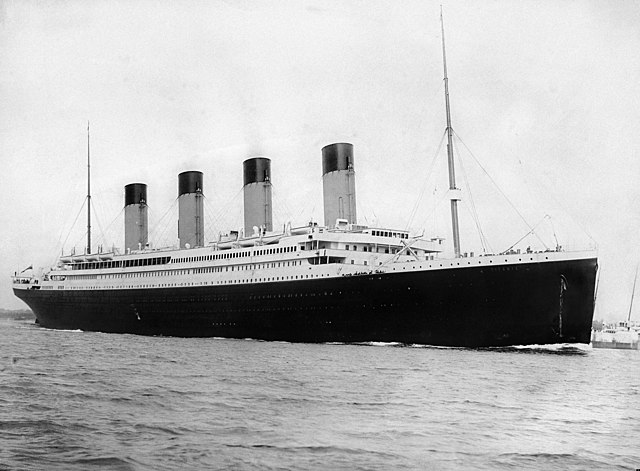
Virginia Frauenthal, daughter of Lillian Gapen Frauenthal, grew up in St. Louis surrounded by the echoes of the Frauenthal legacy: the stories of Max's courage at Spotsylvania, of Henry's leap into the Titanic lifeboat, of her grandfather Barney W. Frauenthal's Bureau of Information at the busiest train station in the world. Bernice Frauenthal had married the Englishman Alec Ebsworth, and their son Barney was Virginia's cousin, she watched him grow from a boy playing cricket in St. Louis to a man who would build cruise lines and collect masterpieces.
Virginia married Donald Frederick Walhus, son of Dr. Martin J. Walhus of Spring Grove, bringing together two distinctly American family lines: the Frauenthals — Bavarian-Jewish immigrants who became Civil War heroes, town builders, and railroad men, and the Walhus family, Norwegian immigrants who crossed the Atlantic to build new lives in Spring Grove, Minnesota. It was a marriage of the frontier South and the Scandinavian Midwest, of entrepreneurial ambition and Lutheran work ethic.
Together, Donald and Virginia raised their family with the values both lines had carried across oceans and through wars: hard work, civic responsibility, and the belief that you leave a place better than you found it. Donald, like his father Martin, was an avid golfer, bringing the quiet steadiness of the Norwegian-American tradition into everything he did. Virginia brought the Frauenthal fire, the restless energy of a family that had built towns, survived the Titanic, and run the information hub of America's greatest railroad station.
Donald Frederick Walhus
Son of Dr. Martin J. Walhus of Spring Grove. Husband of Virginia Frauenthal. Avid golfer, like his father.
Virginia Frauenthal Walhus
Daughter of Lillian Gapen Frauenthal. Cousin of Barney Ebsworth through the Frauenthal family.
Ann Frauenthal King
Virginia's sister, Ann Frauenthal, carried the Frauenthal name into another branch of the family tree. Ann married Harold E. King of Peoria, Illinois, and together they raised two children: Corky King and Carol King.
The King family in Peoria represented yet another chapter in the Frauenthal diaspora, the same family that had built towns in Arkansas, survived the Titanic in the Atlantic, and managed the railroads in St. Louis now put down roots in the heart of Illinois. Through Ann, the Frauenthal stories, traditions, and spirit were passed down to another generation of Americans.
Corky King, son of Ann and Harold, grew up in Peoria and developed a passion for swimming that would define his career. Corky became a competitive swim coach in the Chicago suburbs, spending decades on pool decks teaching young swimmers the discipline and technique of the sport. He was well-known in Illinois swimming circles, a coach who cared about character as much as times. Corky married Julie and together they raised four children, including Skylar King. The competitive drive that ran through the Frauenthal line, from Max's courage at Spotsylvania to Barney Ebsworth's business acumen to Paul Walhus's quarter-mile sprints, found its expression in Corky through the water.
His sister Carol King also grew up in Peoria and remained close to the family's Illinois roots. Carol settled in the Chautauqua area, maintaining the family's connection to the cottage community where she and Corky had spent their childhood summers. Carol raised her own family in the Illinois heartland, keeping alive the Frauenthal tradition of deep community ties and family gatherings that had characterized the clan since Max first arrived in Arkansas over a century earlier.
Together, Corky and Carol represented the King branch of the Frauenthal family, the line that carried Ed and Lillian's legacy through Ann into the heart of the Midwest. While the Ebsworth branch reached the heights of the art world and the Walhus branch spread to Texas, the Kings stayed rooted in Illinois, anchoring the family's connection to its Midwestern origins.
Summers at Chautauqua
The Frauenthal and King families had a cottage in Chautauqua, Illinois, where the families spent many summers together. Chautauqua was a small summer community located along the Illinois River near Peoria, in Mason County. It was part of the great Chautauqua movement — a wave of educational and cultural summer assemblies that swept across America beginning in 1874 at Chautauqua Lake, New York.
Across the Midwest, communities established their own Chautauqua grounds: clusters of simple frame cottages gathered around assembly halls and pavilions, usually near water, where families came each summer for recreation, education, and community. The Illinois River bluffs and backwaters provided the setting, and nearby Peoria families, like the Frauenthals and Kings, made Chautauqua their seasonal home.
For the Walhus and King children, those Chautauqua summers were where family bonds were forged, cousins running between cottages, long evenings on porches, swimming in the river, and the kind of unhurried togetherness that only summer can provide. It was in places like Chautauqua that the family stories were passed down: Max's courage at Spotsylvania, Henry's leap into the Titanic lifeboat, Barney Frauenthal's Bureau of Information. The cottage at Chautauqua was where history became family lore.
Chautauqua, Illinois
Summer cottage community near Peoria, in Mason County, along the Illinois River. Part of the national Chautauqua movement (est. 1874).
The Cottage
The Frauenthal and King families' summer retreat. Many childhood summers spent among cousins, porches, and river water.
The Chautauqua Movement
A nationwide wave of summer assemblies focused on education, culture, and community that began at Chautauqua Lake, New York in 1874 and spread to hundreds of communities across America.
Ann Frauenthal King
Sister of Virginia. Married Harold E. King of Peoria, Illinois. Carried the Frauenthal legacy into the King family.
Harold E. King
Husband of Ann Frauenthal. Peoria, Illinois.
Corky King
Son of Ann and Harold. Competitive swim coach in the Chicago suburbs for decades. Known in Illinois swimming circles for developing young athletes. Married Julie. Four children including Skylar King. The athletic drive of the Frauenthal line expressed through the water.
Julie King
Wife of Corky King. Together they raised four children in the Chicago area while Corky coached swimming.
Skylar King
Child of Corky and Julie King. The next generation of the Frauenthal-King line, carrying the family into the 21st century.
Carol King
Daughter of Ann and Harold. Remained in the Chautauqua area of Illinois, maintaining the family's connection to the cottage community. Raised her family close to the Frauenthal roots in the Midwest.
Muriel Ebsworth Mueller
Barney Ebsworth had a twin sister — Muriel Ebsworth. While Barney was building cruise lines and collecting masterpieces, Muriel chose a different path: she became a teacher. Born alongside Barney in St. Louis in 1934, Muriel dedicated her career to education before eventually moving from St. Louis to North Carolina, where she married Dave Mueller and became Muriel Mueller. Together, Muriel and Dave raised four children.
The twins couldn't have been more different in their public profiles, one built a $323 million art collection, the other shaped young minds in a classroom, but they shared the same roots and the same drive to make an impact. Barney's legacy is measured in auction records and museum collections. Muriel's is measured in the students she taught and the family she raised. Muriel predeceased her brother.
Muriel Louise Ebsworth Mueller
Twin sister of Barney Ebsworth. Born 1934, St. Louis. Teacher. Moved to North Carolina.
Dave Mueller
Husband of Muriel. North Carolina.
Roger Mueller
Son of Muriel and Dave. One of four children raised in North Carolina.
Children
Muriel and Dave raised four children in North Carolina, including Roger and his siblings.
Aunt Bern & Cousin Jean
Bernice ("Bern") was a beloved figure in the family. Aunt Bern's daughter Jean — Paul and Alice-Ann's cousin, would go on to live one of the most remarkable lives in the entire family tree.
Jean Aubuchon Cinader (1922–2019)
Jean Aubuchon, daughter of Bernice, grew up in Webster Groves, Missouri (though born in St. Louis on August 9, 1922, to Cliff and Lucille Aubuchon). The Aubuchon family itself has deep American roots, the name traces back to Jean Aubuchon, who left Dieppe, Normandy, France for Montreal in 1648 and whose descendants became one of the founding families of Ste. Genevieve and St. Louis.
But young Jean had ambitions far beyond the St. Louis suburbs. She headed to New York City, where she launched a career on the stage. In December 1945, Jean co-starred in the original Broadway production of Elmer Rice's comedy "Dream Girl" at the Coronet Theatre, which ran for an impressive 348 performances. She also appeared in over 100 television commercials, becoming a familiar face to millions of American viewers.
In 1951, Jean married Robert A. Cinader (1924–1982), one of the most prolific television producers in Hollywood history. Bob had begun his career as a writer for Holiday Magazine, then headed the United Nations' publications division before transitioning to television. Together for 31 years until Bob's death from cancer in 1982, the Cinaders were behind some of the most iconic TV shows ever made:
Dragnet (1967)
Bob served as associate producer on the revival of the groundbreaking police procedural, working with Jack Webb's Mark VII Limited.
Adam-12
Bob co-created and produced this pioneering patrol-car drama (1968–1975) that set the template for every police show that followed.
Emergency!
Bob created and executive produced all 125 episodes (1972–1979). The paramedic drama literally changed American emergency services, inspiring communities nationwide to create paramedic and 911 systems.
Knight Rider
Bob served as co-executive producer on the early episodes of this sci-fi action series (1982) — one of his final projects before his death.
Bob Cinader's impact on real-world emergency services was so significant that Los Angeles County Fire Station 127 in Carson, California (depicted as "Station 51" in Emergency!) was officially named the Robert A. Cinader Memorial Fire Station in his honor.
Jean survived Bob by nearly four decades, living in Los Angeles until her death on February 5, 2019 at age 96. From a girl in Webster Groves to Broadway to Hollywood — Jean's story is pure Frauenthal-Walhus energy: see an opportunity, go after it, and build something that millions of people will remember.
Bernice "Bern" Walhus
Sister of Donald Frederick Walhus. Aunt to Paul and Alice-Ann.
Jean Aubuchon Cinader
Born 1922, St. Louis. Broadway actress (Dream Girl, 1945). 100+ TV commercials. Married Bob Cinader 1951. Died 2019, age 96.
Bob Cinader
Born 1924, New York. Creator of Emergency!, co-creator of Adam-12. A fire station bears his name. Died 1982, age 58.
Alice-Ann Walhus Whiteneck
Alice-Ann Walhus, daughter of Donald and Virginia and older sister of Paul, grew up in St. Louis — the same city where her grandmother Lillian had married into the Frauenthal family, where her great-grandfather Barney W. Frauenthal had managed Union Station, and where her cousin Barney Ebsworth was growing up playing cricket and running track. She was steeped in the family stories from both sides: the Norwegian perseverance of the Walhus line and the Frauenthal fire of Civil War heroism, Titanic survival, and railroad innovation.
Like her brother Paul, Alice-Ann spent childhood summers at the family cottage in Chautauqua, Illinois, where the Frauenthal and King families gathered each year. Those summers, running between cottages with cousins Corky and Carol King, swimming in the Illinois River, listening to the old family stories on the porch, were where the bonds of this sprawling family were forged.
Alice-Ann married Don Whiteneck, and together they headed west to California, where they built a mansion in Walnut Creek — a prosperous community in Contra Costa County nestled in the rolling oak-covered hills of the East Bay, about 25 miles east of San Francisco. The Walnut Creek home continued the Frauenthal tradition of building something substantial and putting your name on it. From Max Frauenthal's first brick building in Conway in 1879 to Barney Ebsworth's Hunts Point estate on Lake Washington, the family has always been builders. Alice-Ann and Don's home in the rolling hills of Walnut Creek stands as the California chapter of that legacy.
Alice-Ann Walhus Whiteneck
Daughter of Donald and Virginia. Grew up in St. Louis. Sister of Paul. Summers at Chautauqua. Built a life in Walnut Creek, California.
Don Whiteneck
Husband of Alice-Ann. Together they built their mansion in Walnut Creek, CA — in the East Bay hills near San Francisco.
Paul Walhus
Paul Walhus was born at 7:40 AM on December 2, 1944 in St. Louis, Missouri, to Donald Frederick Walhus and Virginia Frauenthal Walhus. He arrived in the same city where his great-grandfather Barney W. Frauenthal had managed Union Station, where his cousin Barney Ebsworth would be born a decade earlier, and where the Frauenthal name had meant something for generations.
Paul grew up in the St. Louis area and attended Bayless High School in Affton, Missouri — a south St. Louis County community. (He later built a website commemorating the school at baylesshigh.com.) Paul was a gifted quarter-miler, finishing 2nd in his conference behind only Wayne Hermann of Clayton High. His cousin Barney Ebsworth, ten years older and already a standout sprinter at Cleveland High, served as Paul's mentor on the track, pushing the younger boy to be faster, tougher, and more disciplined. Barney's speed had earned him an athletic scholarship to Mizzou, and he passed that competitive fire down to Paul. The bond between the two cousins, forged in shared sweat and quarter-mile times, would last a lifetime.
Paul is the family's modern-day builder. From launching one of Austin's first online communities with the spring.com BBS in 1996 to assembling the WholeTech Network of 108 websites in 2026, Paul has channeled the Frauenthal entrepreneurial spirit and the Walhus work ethic into three decades of web development, community building, and digital innovation in Austin, Texas.
Like Max, who saw opportunity in an alley where farmers parked their wagons and moved the entire commercial center of Conway, Paul has always had an eye for where things are going. Like his great-grandfather Barney, who authored street guides and information guides for the 1904 World's Fair to help millions find their way, Paul has spent his career organizing information and connecting people to the places and ideas they need. Like cousin Barney Ebsworth, who taught himself art history at the Louvre by simply looking, Paul taught himself web development and built an empire of websites from scratch.
The legacy continues. The Frauenthal flame burns on.
Paul Walhus
Born December 2, 1944, 7:40 AM, St. Louis. Bayless High School, Affton, MO. Son of Donald and Virginia.
Career
Web pioneer since 1996. Builder of the WholeTech Network — 108 websites, 30 years online, Austin, TX.
Bayless High
baylesshigh.com — Paul built a website commemorating his alma mater in Affton, Missouri.
WholeTech Network
The modern expression of the Frauenthal builder spirit — 108 live websites across every category imaginable.
Shey Roth — The Next Generation
Shey Roth, Paul's son, lives in Sonoma County, California. A man of many talents, Shey is a DJ, a stand-up comedian, and a former worker at Whole Foods. Like every generation of this family, Shey has forged his own path, blending performance, humor, and an independent spirit that echoes the Frauenthal and Walhus drive to connect with people and communities. His website is at sheyroth.com.
Shey Roth
Son of Paul Walhus. DJ, comedian, former Whole Foods. Sonoma County, California.